Motorised Blinds and Curtains in a Smart Home: Lutron, Wiring and How Integration Works
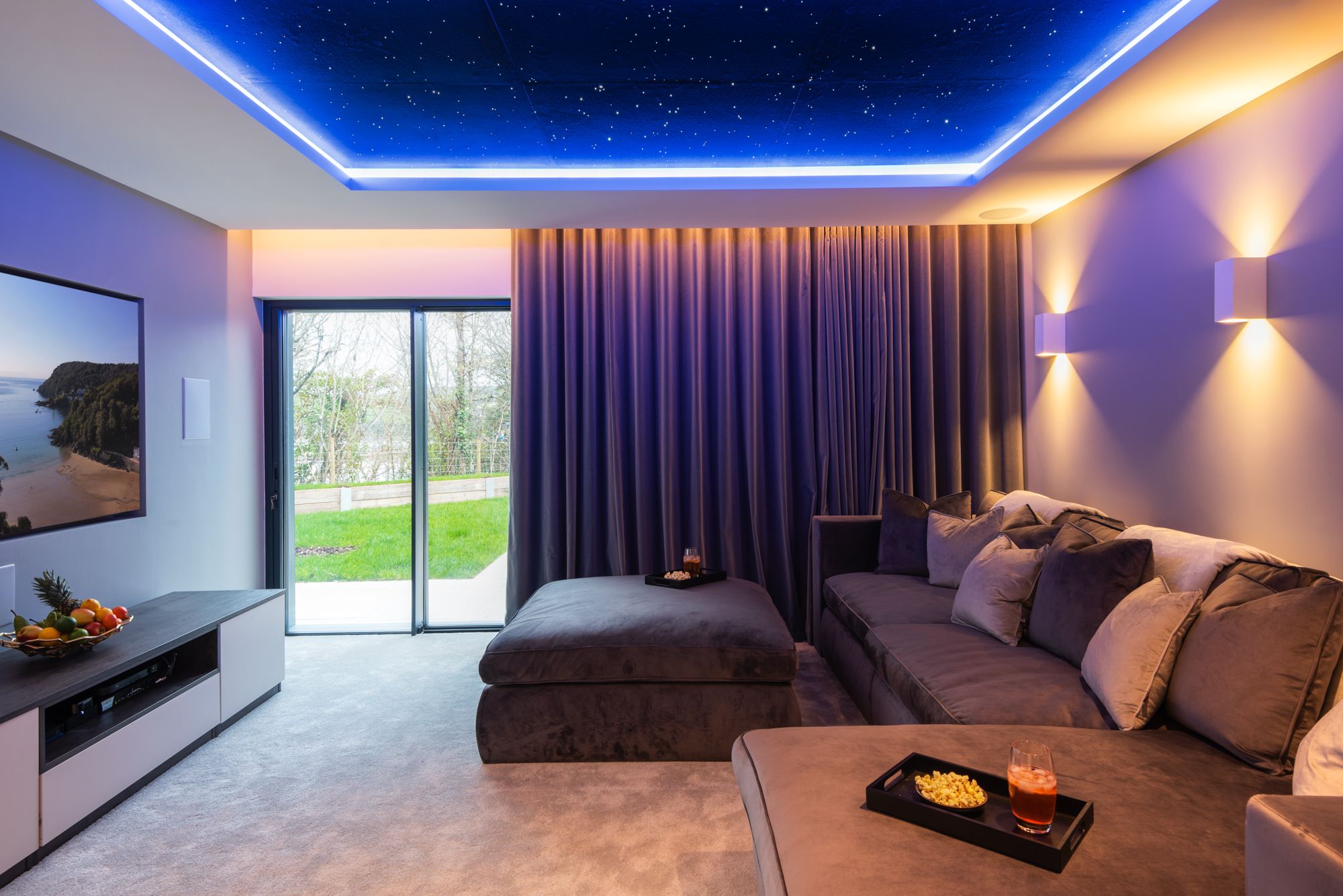
Motorised blinds and curtains are one of the smart home features people notice most and use every day. Blinds open with your morning lighting scene. Curtains close at sunset without anyone touching them. Shading lowers automatically to protect furniture and artwork when the sun moves round.
Done well, motorised shading is quiet and unobtrusive and works together with your lighting. Done badly, it means noisy motors, blinds that drift out of line and yet another app. This guide explains the options, from Lutron shading systems to battery and wired motors. It covers how shading integrates with lighting and whole-home control, what it typically costs, and how to plan it properly, particularly in a new build or renovation.
What are motorised blinds and curtains?
Motorised blinds and curtains use small electric motors, hidden in the blind roller, headrail or curtain track, to open and close them at the touch of a button. In a smart home, they are controlled from the same keypads, touchscreens and app as your lighting. They can also run automatically: on a schedule, at sunrise and sunset, or in response to sunlight, temperature or security settings.
Why automate your blinds and curtains?
Everyday convenience
The obvious benefit is not having to open and close every window by hand. In a large home with many windows, or with tall glazing and roof lights that are hard to reach, it saves real time. A single “Good morning” or “Goodnight” button can open or close the whole house.
Better use of daylight
Natural light is the most flattering light in any home. Shading that adjusts through the day lets you make the most of it, while cutting glare on screens and stopping rooms from overheating. On our smart home lighting design and control projects, blinds and lighting are designed together so each room looks right at every time of day.
Protecting furniture, flooring and artwork
Direct sunlight fades fabrics, timber and artwork. Automated shading can lower when the sun reaches a particular side of the house, or when sensors detect strong light, even when nobody is home. We have used this approach in homes with valuable art collections, and in a private car and motorbike showroom where in-ceiling Lutron blinds protect the vehicles and artwork from sunlight. See the private car showroom project.
Comfort and energy
Blinds and curtains help keep heat out in summer and in during winter. Linking them to your heating and cooling, and to sensors for light and temperature, means the house manages solar gain for you rather than relying on someone to remember.
Privacy and security
Shading can close automatically at dusk, or as part of an “Away” scene that also arms the alarm and turns off the lights. While you are away, blinds and lights can follow a natural pattern so the house looks occupied.
Child safety
Looped cords and chains on manually operated blinds are a known strangulation risk for young children. Motorised blinds remove the need for cords and chains altogether, which is one reason they are popular in family homes.
The main types of motorised shading
Almost any type of window covering can be motorised. The most common in UK homes are:
- Roller blinds. These are the most popular choice, from sheer fabrics that filter light to blackout fabrics for bedrooms and cinemas. The motor is hidden inside the roller tube.
- Roman blinds. Soft fabric blinds that fold as they rise. They are well suited to traditional and period interiors.
- Curtains on motorised tracks. These suit wide windows, bay windows and floor-to-ceiling glazing. Curtains can be motorised in most styles, including wave and pinch pleat.
- Wooden and venetian blinds. The slats can tilt, and in some systems lift as well.
- Skylight and roof light blinds. These use tensioned systems that hold the fabric flat on angled or horizontal glazing.
- Cassette and recessed blinds. The roller is hidden in a ceiling pocket or a slim cassette, so nothing is visible when the blind is up.
Wired or battery-powered motors?
This is one of the most important early decisions, and the right answer depends on whether the walls and ceilings are open.
Wired (mains or low-voltage) motors
Wired motors are the preferred choice for new builds and major renovations. They need a cable to each window, which is simple to install before plastering and much harder afterwards. In return they offer:
- No batteries to change, ever
- Consistent power for larger and heavier blinds and long curtain runs
- A tidier finish, with no visible battery packs
Battery-powered motors
Battery motors are designed for finished homes, where running a cable to every window would mean opening up walls. Modern battery systems are discreet, and their batteries last a long time in normal use. They are a good way to add automated shading to an existing home with little disruption.
The trade-off is changing batteries every few years, and somewhat less flexibility for very large or heavy treatments. Many projects use a mix: wired motors where cabling is easy, and battery motors where it is not.
The rule for new builds
If you are building or renovating, run shading cables to every window that might ever be motorised, even if you do not plan to fit blinds there straight away. The cable costs very little at first fix and keeps every option open.
Lutron shading systems
Lutron is best known for lighting control, but it also makes some of the most refined motorised shading available. Because it comes from the same manufacturer as the lighting, it integrates especially well with it. Lutron’s residential shading includes:
- Palladiom shading. Lutron’s premium design-led range, with refined brackets and fabrics, available in wired and battery-powered (wire-free) versions.
- Sivoia QS. A wide range covering roller blinds, Roman blinds, wood blinds, curtain tracks and tensioned skylight blinds. It is the workhorse of many high-end Lutron installations.
- Triathlon. Battery-powered roller and honeycomb blinds designed for straightforward installation in existing homes.
Lutron shading is controlled from the same keypads as Lutron lighting. That means a single “Evening” button can dim the lights and lower the blinds together, and blinds can move in perfect alignment across a run of windows.
We install Lutron shading alongside Lutron lighting control, from in-ceiling blinds in a private car showroom to blackout blinds in home cinemas. Our guide to Lutron lighting control explains how the wider Lutron system works.
Silent Gliss and other systems
Lutron is not the only option. Silent Gliss is well known for high-quality motorised curtain tracks and blinds, and it is often specified where interior designers want particular curtain styles or fabrics. We have installed Silent Gliss blinds and curtains on several projects. In a Cheshire smart home, Silent Gliss blinds and curtain tracks are run by a Crestron system to protect artwork and manage heat gain. See the Cheshire smart home project.
In a central London duplex, Silent Gliss blinds and curtains provide privacy by day and blackout at night. Discreet Lutron Palladiom keypads and Control4 touch panels keep the technology out of sight. See the London smart home project.
The right choice depends on the look you want, the type of windows, and the control system in the rest of the house. A good integrator will show you fabric and hardware options and explain how each will be controlled.
How motorised shading integrates with your smart home
Motorised blinds become far more useful when they are part of a whole-home system rather than operated from their own remote or app. With a Lutron, Control4 or Crestron system, shading can be:
- Controlled from keypads and touchscreens, room by room or for the whole house.
- Built into scenes, so “Cinema” closes the blackout blinds and dims the lights in one press.
- Scheduled to open and close at set times or at sunrise and sunset, adjusting automatically through the year.
- Automated by sensors, responding to sunlight, temperature or the time of day.
- Linked to security, closing automatically as part of an “Away” or “Night” mode.
- Controlled remotely from your phone, for example to close the blinds on a hot day while you are out.
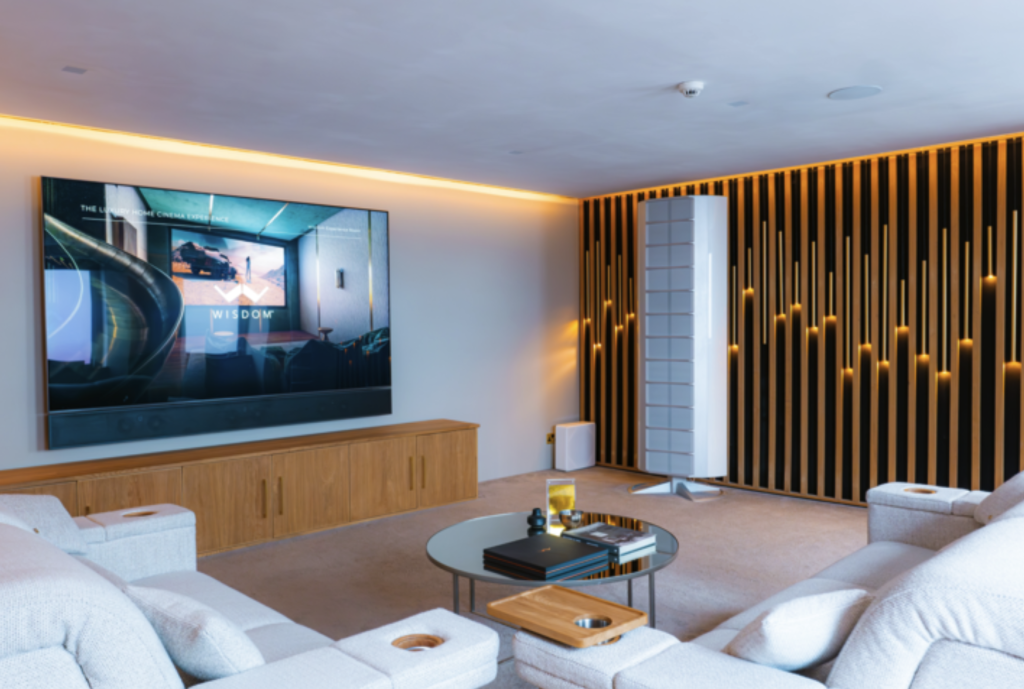
In home cinemas and media rooms, automated blackout blinds are especially useful. A room can work as a bright family space by day and become a dark cinema at the touch of a button, as in our Star Wars themed cinema with Lutron blackout blinds. See the Star Wars cinema.
How much do motorised blinds cost?
Prices depend on the size and number of windows, the type of blind or curtain, the fabric, and whether the motors are wired or battery-powered. As a rough guide for professionally supplied and installed shading in the UK:
- Battery-powered roller blinds in standard-sized windows sit at the lower end, typically from several hundred pounds per window.
- Wired or designer blinds, such as fabric-wrapped Palladiom systems or recessed cassette blinds, typically cost more than £1,000 per window.
- Large curtain tracks, skylight blinds and very large glazing cost more again, priced individually.
Across a whole house, motorised shading is often one of the larger items in a smart home budget, so many clients prioritise the rooms where it adds the most: bedrooms, living spaces, cinemas and hard-to-reach glazing. Our guide to smart home costs in the UK shows how shading fits into an overall budget.
Planning tips for motorised shading
- Plan shading with the lighting and interior design. Fabric choice, blind position and lighting scenes all affect each other.
- Decide on the finish early. Recessed pockets for blinds and curtain tracks need to be built into ceilings and window reveals before plastering.
- Cable every window in a new build, even those you are not motorising yet.
- Think about blackout. Bedrooms and cinemas need blackout fabric and close-fitting installation, sometimes with side channels.
- Ask how each blind will be controlled. If it needs its own separate app or remote, it is not properly integrated.
- Check listed building requirements. In listed and period properties, discreet battery systems and careful fixing methods may be needed. Speak to your conservation officer where alterations are involved.
Frequently asked questions
Can existing blinds be motorised?
Sometimes. Some blinds and curtain tracks can be fitted with motors, but in many cases it is more reliable to replace them with a motorised system designed for the window. A survey will confirm the best option.
Are motorised blinds noisy?
Quality motorised blinds are very quiet. Professional systems such as Lutron’s are designed for bedrooms and living spaces, where motor noise would be noticed. Cheap motors are where noise problems usually come from.
How long do batteries last in battery-powered blinds?
It depends on the system, the size of the blind and how often it moves. Modern professional battery systems are designed to last several years between battery changes in typical use.
Can motorised blinds work with Alexa or Google?
Yes. When blinds are part of a smart home system such as Lutron, Control4 or Crestron, they can usually be controlled by voice alongside the rest of the home. The exact features depend on the platform.
What happens to motorised blinds in a power cut?
Wired blinds stay where they are until power returns. Battery-powered blinds keep working, because they do not rely on mains power.
Do I need a smart home system to have motorised blinds?
No. Blinds can be installed with their own simple controls. But integrating them with your lighting and control system is what makes them work as part of the home, through scenes, schedules and automation.
Talk to us about motorised shading
Whether you are building, renovating or adding shading to a finished home, our team can help you choose the right systems and fabrics and plan the cabling. We then integrate the shading with your lighting and control. See motorised shading and lighting control working together at our Leeds showroom, explore our smart home installation services, or contact our team to arrange a consultation.