How Much Does a Smart Home Cost in the UK? A Realistic 2026 Guide

A professionally installed smart home in the UK typically costs anywhere from a few thousand pounds for a single system in one or two rooms, to £30,000–£80,000 for an integrated system across a family home. Large whole-home projects run to £150,000 and beyond. Where your home sits in that range depends far less on the brand of keypad on the wall than most people expect.
This guide explains what drives the cost and gives realistic price ranges for each part of a smart home. It also shows where the money is best spent, and where cutting corners usually costs more later. The figures are based on typical UK market prices for professionally designed and installed systems in 2026. They are not quotes. Every home is different, and the only reliable figure comes from a survey of your property.
Why smart home prices vary so much
Two houses of a similar size can have technology budgets tens of thousands of pounds apart. Five factors explain almost all of the difference.
1. How many systems you bring together
A system that only controls lighting costs a fraction of one that also manages heating, blinds, music, TVs, security, gates and cameras from one app. Each extra system adds equipment, cabling and, often overlooked, the programming time needed to make everything work together reliably.
2. The size and layout of the property
More rooms mean more lighting circuits, more audio zones, more cabling and more programming. Outbuildings, annexes, pools and long driveways all add cost, because the network and control system have to reach them.
3. New build, renovation or finished home
Cabling a house while the walls and ceilings are open is far cheaper than doing it afterwards. In a finished home, wireless products make a lot possible without major disruption. But some features, such as wired audio in every ceiling, are more expensive or impractical to retrofit. Our guide to smart home retrofits explains what works well in an existing home.
4. The specification of the equipment
There is a real difference in build quality, finish and lifespan between consumer smart products and professional platforms such as Lutron, Control4 and Crestron. The same applies between a budget camera and a properly specified CCTV system. Professional equipment costs more to buy, but it is designed to be supported and expanded for many years.
5. Design and programming time
This is the cost homeowners most often underestimate. A smart home is only as good as its scenes, schedules and automations, and setting those up properly takes skilled time. It is also the difference between a system the whole family finds easy and one that only one person in the house understands.
Typical UK smart home costs by system
The ranges below are typical for professionally installed systems in an average to large UK family home. Smaller homes and simpler specifications can come in below them. Large properties and high-end finishes go well above them.
Infrastructure: cabling and network
Every reliable smart home sits on two foundations: the low-voltage cabling hidden in the walls, and the network that carries everything.
- Structured cabling (pre-wire) in a new build or major renovation typically runs from a few thousand pounds for a modest home to £10,000–£25,000 or more for a large, fully future-proofed property.
- A professionally designed network, with a router, managed switches and ceiling-mounted Wi-Fi access points, typically costs from around £2,500 for a smaller home to £10,000 or more for large houses and outbuildings.
These are the least exciting parts of a smart home to pay for. They are also the parts that cost the most to put right later. Our guide to premium home networking for smart homes explains why.
Smart lighting control
Lighting is the system most people use most often, and usually the one they would prioritise again.
- A single room with dimming and scene keypads typically starts from around £1,500–£4,000.
- Key rooms, such as the kitchen, living areas and main bedroom, typically cost £6,000–£15,000.
- Whole-home lighting control on a wired platform such as Lutron HomeWorks typically costs £15,000–£45,000 or more, depending on the number of circuits and keypads.
A professional lighting design, planned alongside the control system, adds to the cost but transforms the result. See our smart home lighting design and control service for how we approach it.
Motorised blinds and curtains
Shading is priced per window, and the range is wide. A battery-powered roller blind in a standard window costs far less than a wired, fabric-wrapped designer blind or a long curtain track across a bank of glazing. As a rough guide, allow several hundred pounds per window at the simple end, rising to well over £1,000 per window for large or architectural shading.
Multi-room audio
- Two or three music zones, for example the kitchen, living room and main bedroom, typically cost £5,000–£12,000.
- Whole-home audio, with music in most rooms and outside, typically costs £15,000–£35,000 or more, especially with hidden plaster-in speakers.
Our multi-room audio and video page shows how these systems are put together.
TVs and video distribution
Centralising your TV sources, such as Sky, Apple TV and CCTV, so they can be watched on any screen avoids a box under every TV. Video distribution typically adds several thousand pounds, rising with the number of screens. The cost of the televisions themselves is extra.
Heating and climate control
Integrating heating with your smart home, as opposed to supplying the heating system itself, typically costs £3,000–£10,000 for a family home. It costs more where air conditioning, heat pumps or many zones are involved.
Security, CCTV and access control
- An integrated CCTV and alarm package for a typical home generally starts around £4,000–£8,000.
- Larger systems with gate entry, video intercom, perimeter detection and full integration with lighting and control commonly reach £15,000–£30,000 or more.
Our smart home security page covers the options.
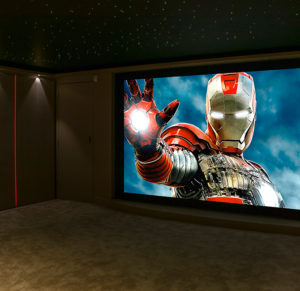
Home cinema and media rooms
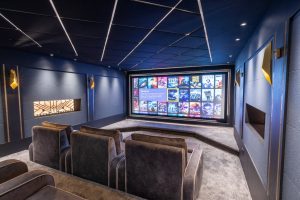
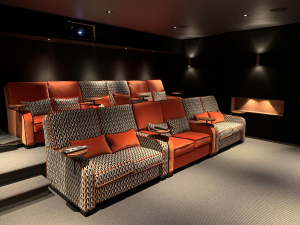
A home cinema is as much a room-build project as a technology one, so it has the widest range of all.
- A well-specified media room with a large display and surround sound can start from around £15,000.
- A dedicated cinema room with a projector, acoustic treatment and cinema seating typically costs £35,000–£130,000.
- Reference-level cinemas go well beyond that.
Our guide to how much a home cinema costs explains what drives the price.
The control system that ties it together
A whole-home control platform, such as Control4 or Crestron, is what turns separate systems into one home you can run from a single app, keypad or touchscreen. The cost covers the controllers, touchscreens, licences and, above all, programming. On a typical integrated project it ranges from a few thousand pounds to £20,000 or more, depending on the number of rooms, interfaces and integrations.
What a whole smart home typically costs
Putting the pieces together, most professionally installed projects fall into one of four broad bands.
- Starter: around £5,000–£20,000. One or two systems done well, such as lighting control in key rooms plus multi-room music, or a properly designed network plus security. This is common in apartments and as the first phase of a larger plan.
- Integrated family home: around £30,000–£80,000. Lighting in main rooms, music in several zones, TV distribution, heating integration, security and a single control system, all built on a proper network.
- Whole-home premium: around £80,000–£150,000. Lighting control and shading throughout, audio and video in most rooms, a dedicated cinema or media room, and full security and access control.
- Estate and flagship: £150,000 and beyond. Large properties, multiple buildings, pools and spas, reference cinemas and the highest-specification finishes.
As a rule of thumb, the infrastructure and programming that you never see usually account for a larger share of a well-built system than people expect. They are also what decides whether it still works well in ten years’ time.
Where to spend and where to save
If your budget is limited, the order you spend it in matters more than the total.
Spend first on
- Cabling and containment, if the walls are open. You can add speakers, TVs and keypads later, but only if the cables are already in place.
- The network. A large share of smart home problems trace back to a weak or badly configured network.
- Design and programming. Good programming makes a modest system feel effortless. Poor programming makes an expensive one frustrating.
Save, or phase, on
- Displays and speakers in secondary rooms. These can be added later if the cabling is ready.
- Premium finishes. Keypad styles and speaker grilles can be upgraded later without touching the infrastructure behind them.
- Systems you are unsure about. Prepare for them with cabling now, and decide later.
The approach we recommend is simple: design for everything on day one, but install in phases if you need to.
Why cheap smart home systems often cost more
The lowest quote is rarely the cheapest system over its lifetime. These are the patterns we see most often when we are asked to take over systems that were installed cheaply:
- No proper network. Systems built on a consumer router drop out, lag and frustrate everyone. Fixing this after the walls are closed costs far more than doing it right first time.
- Short-lived platforms. Some budget ecosystems stop receiving updates or disappear within a few years, leaving hardware that cannot be supported or expanded.
- Rushed programming. A system that “mostly works” generates call-outs for years.
- No aftercare. Firmware updates, broadband changes and the occasional fault are part of living with any connected system. Without a support plan, reliability tends to fall away over time.
If you already have a system that is not delivering, our smart home system recovery service starts with a survey of what you have and what can be kept.
Ongoing costs to budget for
A smart home is not a one-off purchase. Budget for:
- An aftercare or support plan. This covers remote monitoring, software updates and on-site health checks. It is a small fraction of the installation cost, and the most effective way to keep a system reliable. Every Finite installation includes at least six months’ free support, and twelve months is typical. See our aftercare and support plans.
- Platform subscriptions. Some control systems charge an annual subscription for remote access and premium features.
- Hardware refreshes. Expect to replace some equipment, such as routers, Wi-Fi access points and streaming sources, every five to ten years.
DIY smart products vs a professional system
Consumer smart products are inexpensive and useful, and many people start there. Examples include a smart thermostat, a video doorbell and wireless speakers. The limitation is that they rarely become a smart home in the fuller sense. Each one lives in its own app, and they do not work together reliably at the scale of a whole house.
A professional system costs more upfront. What it buys is:
- One reliable system, built on a network designed to carry it
- Equipment hidden away rather than plugged in around the house
- Somebody accountable for making it work and keeping it working
Our article on DIY vs professional smart home installation compares the two in more detail.
When to involve a smart home installer
The earlier an integrator is involved, the better value the result tends to be.
- New builds and major renovations: at the design stage, alongside your architect and before first-fix electrics are agreed. This is when cable routes, plant room space and keypad positions cost the least to plan. Our guide to smart home automation for new builds covers the timeline.
- Finished homes: as soon as you are seriously considering a project, even before you have a fixed budget. A good installer will be honest about what is realistic without opening walls.
Frequently asked questions
How much does it cost to automate a house in the UK?
An integrated smart home in a typical UK family house usually costs £30,000–£80,000 when professionally installed. Simpler projects covering one or two systems can cost from around £5,000. Large whole-home projects with shading, cinema and full security often exceed £150,000.
How much does smart lighting cost to install?
Smart lighting control typically costs £1,500–£4,000 for a single room, £6,000–£15,000 for key rooms, and £15,000–£45,000 or more for whole-home control. The final cost depends on the number of circuits and keypads, and whether lighting design is included.
How much does a Control4 system cost?
A Control4 system can start at a few thousand pounds for a single room or apartment. For a family home, Control4 usually forms part of a wider integrated system costing £30,000–£80,000 or more, because the price depends mostly on the lighting, audio, video and security it controls.
What is the most expensive part of a smart home?
Across a whole project, cabling and infrastructure are often the largest single cost, followed by lighting control or a home cinema. Programming and commissioning time is the cost most often underestimated.
Is a smart home worth the money?
For homeowners planning to stay in a property for several years, a well-designed system is usually worth it for the day-to-day convenience, security and energy control it brings. The value comes from reliability and good design, not from the number of gadgets.
Can I install a smart home in stages?
Yes. Many clients start with the network and one or two systems, then add rooms and features later. The key is to plan the infrastructure for the whole house at the start, so later phases simply connect in.
Do smart homes add value to a property?
A well-documented, professionally installed system with wired lighting control, integrated audio and dependable security is increasingly expected in premium UK homes. The clearest value comes from good infrastructure and design rather than any single device.
Get a figure for your home
The quickest way to a realistic budget is a conversation about how you live and what you want your home to do. Our team will talk through your plans, explain the options at different budgets, and give you a clear breakdown before you commit to anything.
See systems working at our Leeds showroom or Cheadle showroom, explore our smart home automation services, or contact our team to arrange a consultation.