Energy Efficient Smart Home: How Automation Cuts Waste Without Cutting Comfort

Most energy in a home is not wasted through bad intentions. It is wasted through small oversights: heating an empty house, lights left on in a room nobody is using, blinds open on a winter evening, equipment sitting on standby overnight. Each one is minor. Together, every day of the year, they add up.
An energy efficient smart home deals with those oversights automatically. This guide explains how home automation reduces energy use across heating, lighting, shading and electrical equipment, which design decisions make the biggest difference, and how to make sure the savings last.
How does a smart home save energy?
A smart home saves energy by making sure heating, lighting and other systems run only when they are needed, only at the level that is needed, and in coordination with each other. Instead of relying on people to remember to adjust things, the house responds to occupancy, time of day, daylight and the weather.
That breaks down into four simple principles:
- Only when needed. Systems switch off or set back when rooms or the whole house are empty.
- Only as much as needed. Lights are dimmed rather than at full brightness, and rooms are heated to the right temperature rather than a single setting for the whole house.
- Everything working together. Blinds, heating and lighting coordinate rather than working against each other.
- Clear visibility. You can see what is on, what is using energy and what can be adjusted, from anywhere.
Heating and climate control
Heating is the biggest energy use in most UK homes, so it is where intelligent control has the greatest effect.
Zoned heating
A single thermostat in the hallway cannot know that the guest bedroom is empty or that the kitchen is warm from cooking. Zoned control lets each room or area be heated to its own temperature on its own schedule. Bedrooms can be cooler during the day, the study warm during working hours and unused rooms kept on a low setback.
Schedules that match real life
Smart heating control follows how the household actually lives, with different schedules for weekdays, weekends and school holidays. Because it is part of the wider smart home, it also responds to scenes. Pressing “Leave” can set the whole house to away mode, and pressing “Welcome Home” on your phone on the way back can bring it up to temperature in time for your arrival.
Responding to open windows and doors
Window and door sensors can pause heating in a room when a window is opened, rather than heating air that is escaping straight outside. It is a simple idea that standalone heating controls rarely manage.
Holiday and away modes
When you are away, the heating stays on frost protection and returns to normal the day before you come back. You can check and change it at any time from your phone. This is particularly useful in second and holiday homes, which might otherwise be heated for weeks with nobody there.
Lighting control
LED lighting has already cut the energy each light uses. Intelligent control makes sure those lights are only on when they should be.
- Dimming. Lighting scenes rarely need every circuit at full power. Dimmed lighting looks better in the evening and uses less energy.
- Absence detection. Lights are switched on by hand but switch off automatically once a room has been empty for a set time. This suits utility rooms, cloakrooms, garages, landings and children’s rooms particularly well.
- Daylight response. In rooms with good natural light, artificial lighting can be lowered as daylight increases.
- Whole-house “off”. A single “Leave” or “Goodnight” button means nothing is left on in a room nobody remembered to check.
- Timed outdoor lighting. Garden and driveway lights turn on at dusk and off at a set time, adjusting automatically through the seasons.
Our lighting design and control service shows how we approach it.
Blinds, curtains and solar gain
Windows are one of the main routes for heat to enter and leave a house. Automated shading turns them into something you can manage.
- In winter, blinds and curtains close automatically at dusk, adding a layer of insulation and keeping heat in overnight. On sunny winter days they can stay open to let free warmth from the sun in.
- In summer, shading lowers on the sunniest elevations during the hottest part of the day, keeping rooms cooler and reducing the need for fans or air conditioning.
- When you are away, shading follows a sensible pattern for both temperature and privacy.
Because blinds are linked to the heating and lighting, the house makes these decisions together rather than in isolation.
Audio-visual and electrical equipment
Televisions, amplifiers, projectors, games consoles and network equipment can draw power around the clock. A smart home can:
- Power down AV equipment completely when a room scene ends, rather than leaving it on standby.
- Schedule non-essential circuits such as towel rails, garden water features or display lighting.
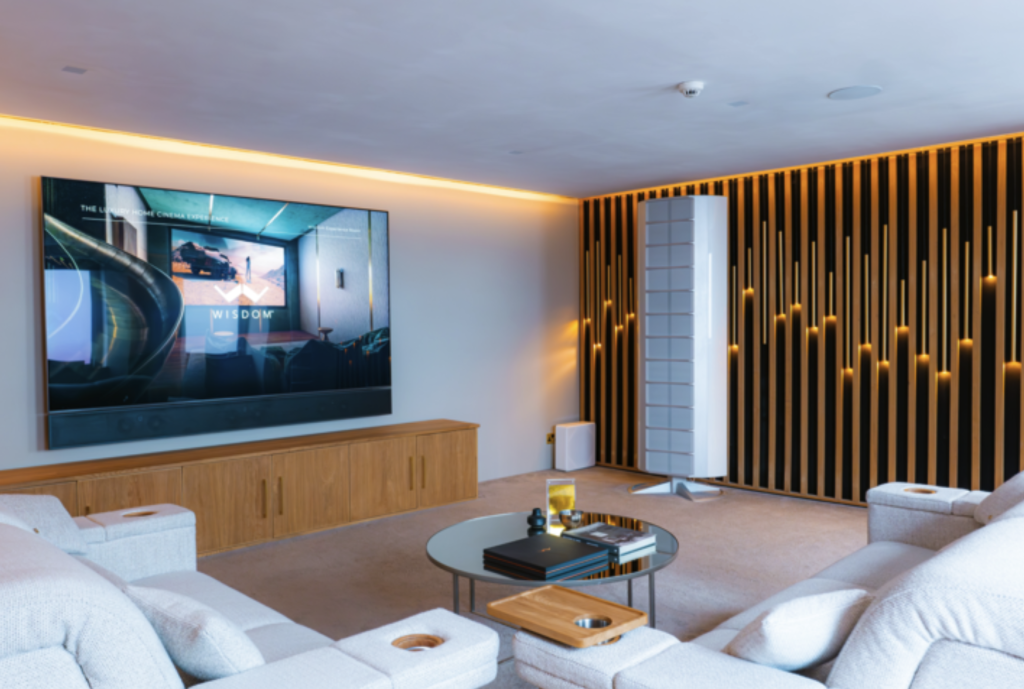
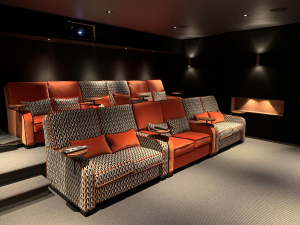
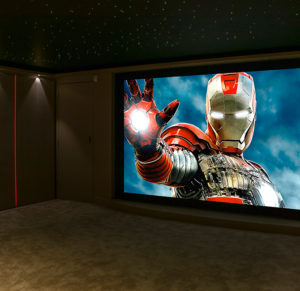
- Manage a home cinema properly, so projectors, processors and amplifiers turn on only when a film starts and shut down in the right order afterwards.
Electric vehicles, solar and batteries
For homes with an electric car, solar panels or a home battery, automation adds another layer of efficiency. EV charging can be scheduled for cheaper off-peak periods, and some systems can prioritise using solar generation when it is available. Being able to see generation, storage and charging in one place makes it far easier to use energy sensibly.
Monitoring: seeing where the energy goes
Energy monitoring shows what the house is using and when. That visibility is useful in itself, but it also helps to tune the system over time. If a room is regularly heated when nobody uses it, or garden lighting runs later than it needs to, the schedules can be adjusted.
Monitoring works best when it is presented clearly within the same app used for the rest of the house, rather than as another set of graphs nobody looks at.
Comfort comes first
An energy efficient smart home should never feel like a compromise. If lights switch off while someone is reading quietly, or a room is cold when you walk in, people override the system and the savings disappear.
This is why good design matters:
- Choosing the right sensors for each room, and placing them where they actually detect people.
- Using absence detection rather than presence detection where people want control over when lights come on.
- Keeping manual overrides simple, so anyone can adjust a room without fighting the automation.
- Setting sensible timings that suit how each room is used.
The best energy-saving systems are the ones nobody notices, because the house is simply comfortable when you are in it and quiet when you are not.
Making the savings last
Energy efficiency is not a one-off setting. Households change, routines shift and seasons turn. A system that was set up perfectly at handover can drift if it is never reviewed.
Ongoing support makes the difference: reviewing schedules, adjusting scenes as the family’s routines change, keeping software up to date and making sure sensors and controls are working properly. This is the role of our aftercare and support service, and it is one of the reasons we encourage clients to see a smart home as a long-term relationship rather than a single installation.
How Finite designs an energy efficient smart home
At Finite Solutions, energy efficiency is built into the way we design every smart home rather than added as an extra. For more than 20 years, our in-house team has brought heating, lighting, shading, audio-visual systems and security together into single, easy-to-use systems for homes across the UK.
We start by understanding how you use each room, then design control, sensors and scenes around that. Whether it is a new build or an existing home, we plan the system so it saves energy quietly in the background while the house feels exactly as you want it to.
Frequently asked questions
Does smart home automation really save energy?
Yes, when it is designed well. Savings come from heating only the rooms that are in use, switching off lighting in empty rooms, managing blinds to keep heat in or out, and turning off equipment that would otherwise sit on standby. How much a home saves depends on its size, construction and how it is used.
What is the most energy efficient smart home upgrade?
For most UK homes, intelligent heating control has the biggest effect, because heating is usually the largest share of household energy use. Zoning, schedules and away modes all reduce the time spent heating empty rooms.
Do automated blinds help keep a house warm?
They can. Closing blinds and curtains at dusk in winter helps keep heat in, and opening them on sunny days lets in free warmth. In summer, lowering them on sunny elevations keeps rooms cooler.
What is absence detection in lighting?
Absence detection means lights are switched on manually but turn off automatically when a room has been empty for a set time. It saves energy without lights switching on unexpectedly.
Can I control my heating when I am away from home?
Yes. With a smart home system you can check and adjust heating, lighting and other systems from your phone wherever you are, and set holiday modes that bring the house back up to temperature before you return.
Will energy-saving automation make my home less comfortable?
It should not. A well-designed system puts comfort first, with sensible timings, the right sensors and easy manual overrides, so the house is comfortable when you are in it and efficient when you are not.
Design a home that looks after itself
If you would like a home that uses energy more intelligently without asking anything extra of the people living in it, our team would be happy to talk it through. We can explain what would make the biggest difference in your home and how it would all work together.
Explore our smart home automation services, or arrange a consultation with our team.