Voice Control for Smart Homes: What It Does Well and Where It Falls Short
Voice control is often the first thing people picture when they hear “smart home” — asking a speaker to turn off the lights or play music. It has a genuine place in a well-designed system, but it works best as one interface among several rather than the foundation the whole house is built on. This guide explains how voice control actually fits into a properly integrated smart home, what it handles reliably, and where a keypad, app or touchscreen will always do a better job.
How voice control fits into a smart home system
Voice assistants such as Amazon Alexa and Google Assistant sit on top of a smart home platform rather than replacing it. They send simple commands — “turn on the kitchen lights”, “set the lounge to 21 degrees” — to whatever system is actually running the house, whether that’s individual smart bulbs and plugs or a fully integrated platform like Control4 or Crestron.
With the Matter standard now established, most new lighting, sensor and plug devices work across both Alexa and Google Assistant without needing separate hubs for each brand. This has made basic voice control considerably more reliable than it was a few years ago, but it hasn’t changed the underlying limitation: voice assistants are good at single, simple commands and noticeably worse at anything involving nuance, multiple rooms, or a scene that needs to look and feel right.
What voice control genuinely does well
Simple, single-room commands. “Turn off the lights”, “lower the blinds”, “play music in the kitchen” — voice handles these reliably and is often faster than reaching for a phone or a keypad, particularly when your hands are full.
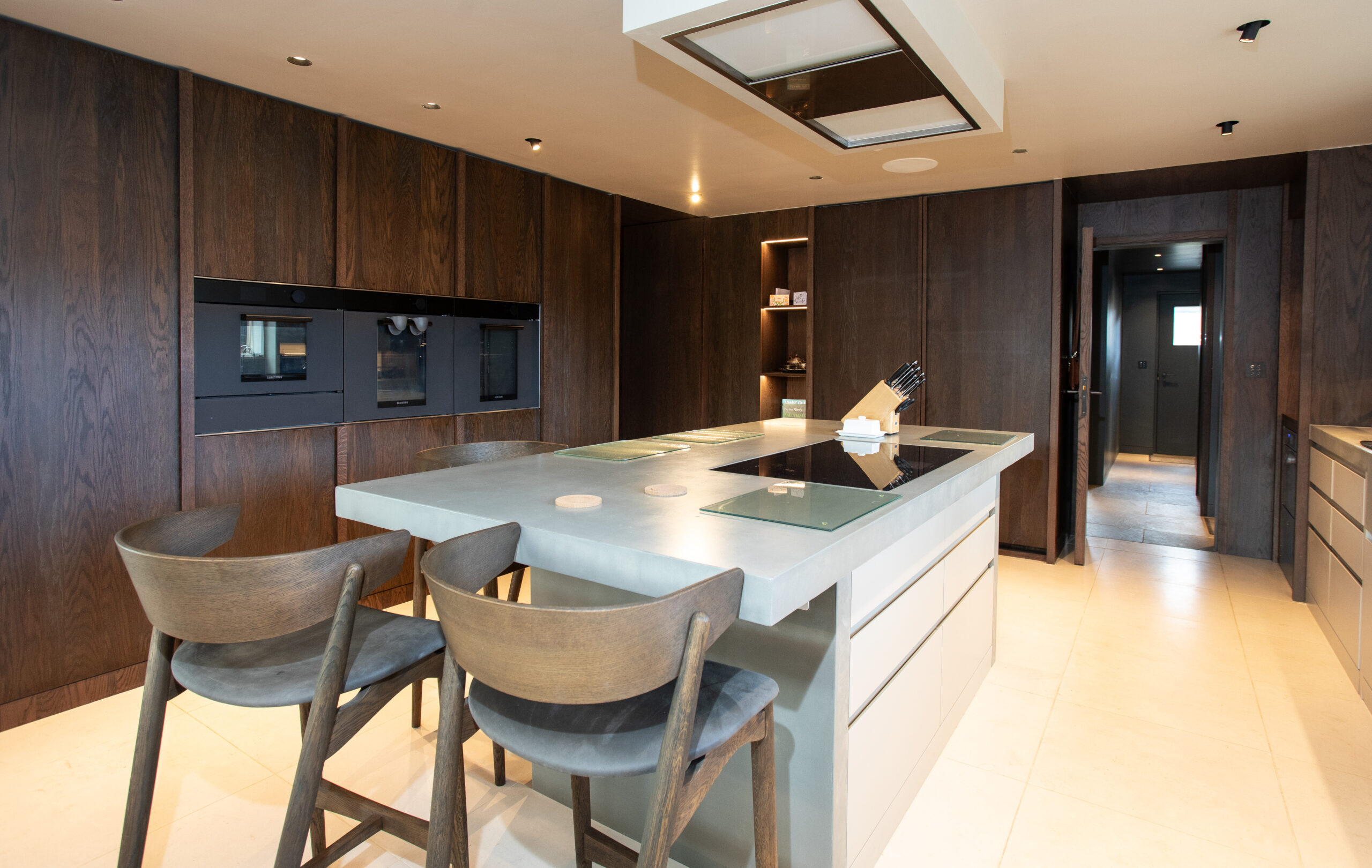
Hands-free convenience in specific rooms. Kitchens, bathrooms and utility rooms are the most common places voice control earns its keep, precisely because touching a switch or picking up a phone isn’t always practical.
Accessibility. For household members with limited mobility, voice control can genuinely open up independent control of lighting, heating and entertainment that would otherwise require physical assistance.
A backup interface. In a well-integrated home, voice sits alongside keypads and an app as one more way in, useful when your phone isn’t to hand and you’re not standing next to a switch.
Where voice control falls short
Complex, multi-circuit scenes. A well-designed “evening” scene might dim eight different lighting circuits to different levels, close blinds on one elevation, and bring the room temperature down half a degree. Describing that verbally every time isn’t realistic — this is what a single keypad button or an automated schedule is for.
Reliability under real conditions. Background noise, multiple people talking, television audio and accents can all cause misheard commands. In a genuinely used family home, a keypad or app that works every single time beats a voice command that works nine times out of ten.
Privacy. Always-listening microphones in every room are a legitimate concern for some households, particularly around bedrooms and home offices. A properly designed system lets you choose exactly which rooms have voice control and which don’t, rather than defaulting to “everywhere”.
Security-critical actions. Locking doors, arming an alarm, or opening a gate are not commands most homeowners want triggered by voice alone, given the risk of being overheard or misinterpreted. These are better handled through a keypad, app with authentication, or a dedicated control panel.
Voice control as part of an integrated platform
The most effective use of voice control we see is as one interface into a single underlying system, not a standalone product line bolted on afterwards. When lighting, heating, blinds, audio and security are all managed by one platform — such as Control4 or Crestron — a voice command triggers exactly the same scene a keypad button or app icon would, rather than talking to a separate ecosystem of disconnected smart plugs and bulbs.
This matters because disconnected “smart” products — a smart bulb here, a smart plug there, each with its own app — tend to create the frustrating experience most people associate with early smart home technology: multiple apps, inconsistent naming, and voice commands that only work for some devices. A properly specified system avoids this by design, with voice control layered on top of a single coordinated platform rather than replacing it.
Choosing where voice control makes sense in your home
Not every room needs it, and a considered installer will talk you through where it genuinely adds value rather than fitting it everywhere by default:
- Kitchens — high value, hands frequently full or dirty
- Living and family rooms — useful for music and simple lighting adjustments
- Bedrooms — optional, and worth discussing given the microphone-always-on question
- Home offices — often better served by keypads and scheduled lighting than voice, to avoid interrupting calls
- Bathrooms and en-suites — useful for hands-free lighting and music
Frequently asked questions
Does voice control work with Control4 and Crestron systems? Yes. Both platforms integrate with Alexa and Google Assistant, allowing voice commands to trigger the same scenes and automations programmed into the wider system, rather than operating as a separate parallel system.
Is Alexa or Google Assistant better for a UK smart home? Both work well for UK households. Alexa tends to have broader third-party device support, while Google Assistant handles UK-specific queries — local weather, UK services — slightly more naturally. The more important factor for a whole-home system is which platform your integrator’s control system supports and how well it’s been configured, not the assistant brand itself.
Can I turn voice control off in certain rooms? Yes, and a properly designed system should let you specify this room by room, particularly for bedrooms and home offices where an always-listening microphone may not be wanted.
Is voice control secure enough to lock doors or arm an alarm? Most integrators avoid making security-critical actions voice-only, since a command can be overheard or misheard. These functions are better handled through an authenticated app, keypad or dedicated panel, with voice reserved for lower-stakes convenience commands.
What is Matter and does it affect voice control? Matter is a cross-manufacturer smart home standard that allows Matter-certified devices to work with Alexa, Google Assistant and Apple Home without separate integrations for each. It has made basic voice control more consistent, though it doesn’t replace the value of a properly programmed, professionally integrated system for anything beyond simple commands.
Plan a properly integrated smart home
Voice control works best when it’s layered onto a single, professionally designed system rather than treated as the system itself. If you’re planning a new build, renovation or retrofit and want voice, keypads and an app all working from the same underlying platform, our team can talk you through what’s realistic for your home. Explore our smart home automation services, see examples in our portfolio, or get in touch to discuss your project.