Home Cinema Screen Types: Which One Is Right for You?
Choosing a projection screen is easy to treat as an afterthought once a projector has been selected, but the screen has a genuine and sometimes decisive effect on picture quality, speaker placement and how well the room performs in anything other than complete darkness. This guide explains the main screen types available for a home cinema and how to choose the right one for your room.
Fixed frame screens
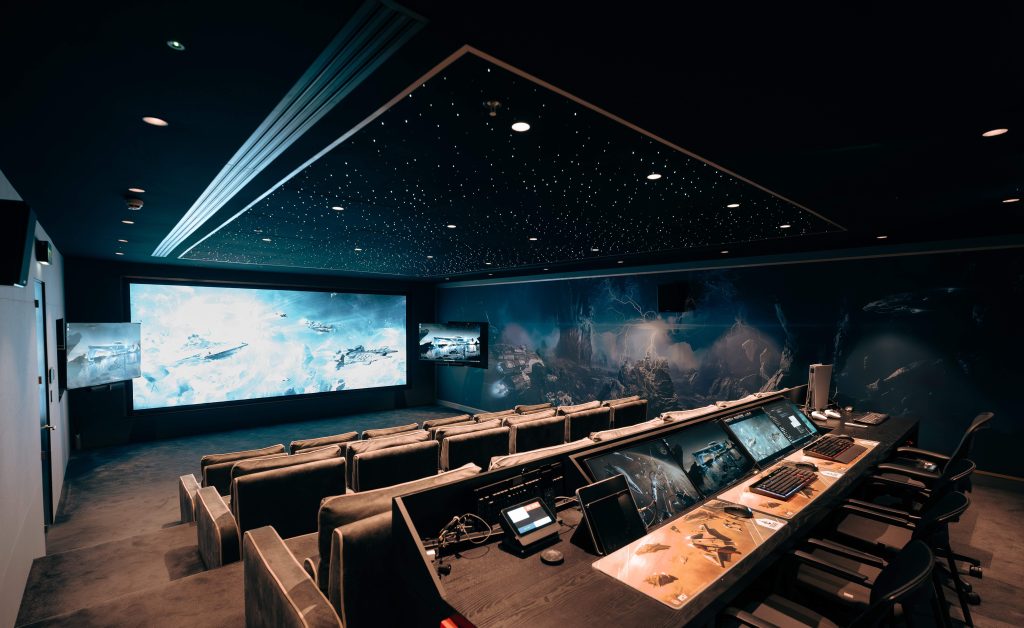
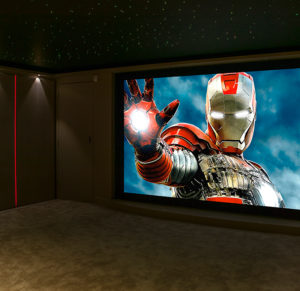
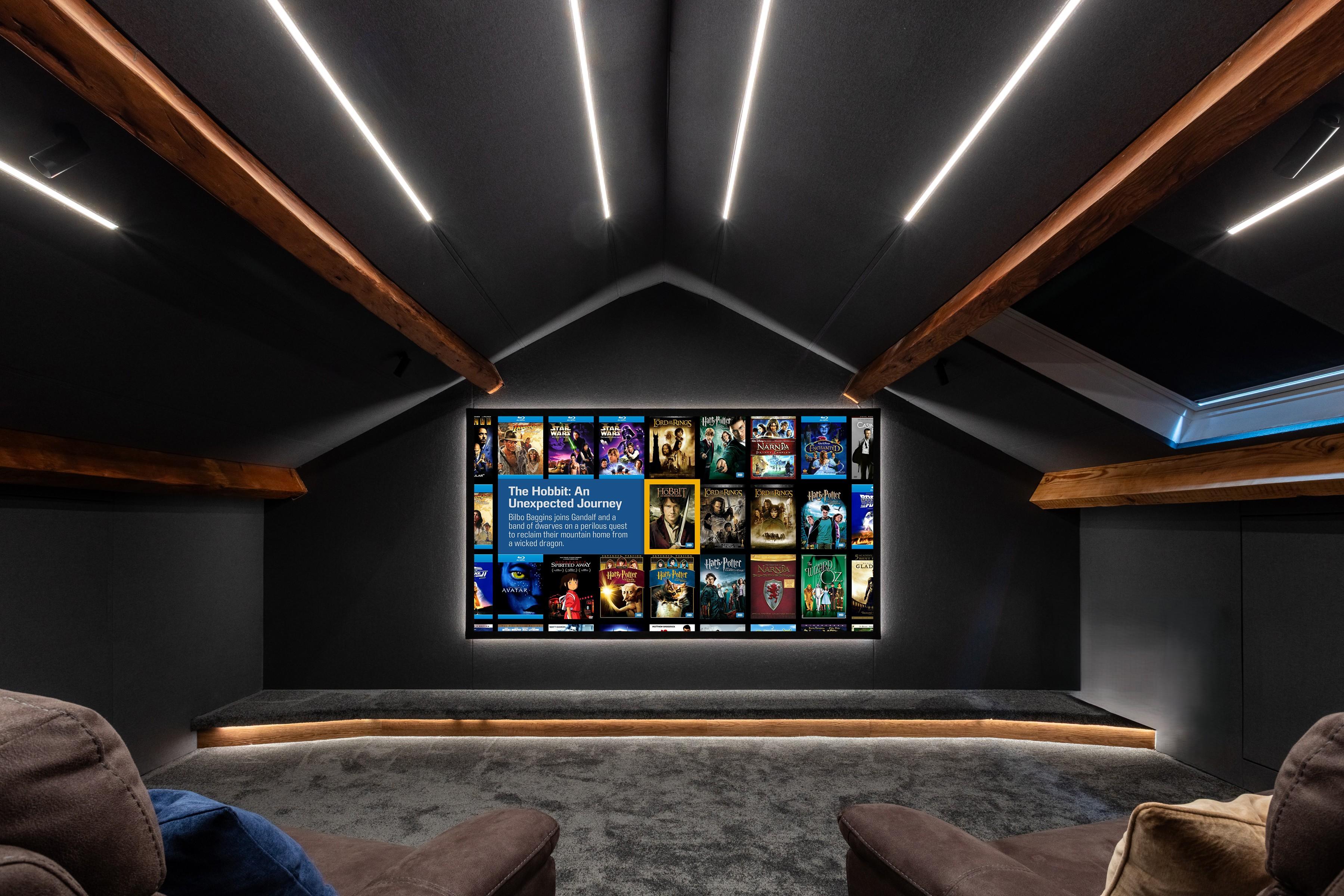
A fixed frame screen — a flat, permanently tensioned surface stretched across a rigid frame — is the standard choice for a dedicated cinema room. It delivers the flattest, most consistent surface of any screen type, which matters more than most people expect, since even slight waviness in a retractable screen can visibly distort a projected image, particularly at larger sizes. Fixed frame screens are the reference option where the room is used solely or primarily for film and TV, and the screen doesn’t need to disappear for other uses.
Acoustically transparent screens
An acoustically transparent (AT) screen uses a perforated or specially woven material that allows sound to pass through it with minimal impact on picture quality. This allows the centre and front left/right speakers to sit directly behind the screen at the correct height — precisely where a dedicated cinema’s sound design calls for them — rather than being positioned above, below or to the side of the image, which compromises both the visual layout of the room and the accuracy of dialogue localisation.
For any dedicated cinema room aiming for a genuinely reference-standard result, an acoustically transparent screen paired with in-wall or in-screen speakers is considered the gold-standard approach, and is standard practice on higher-specification installations.
ALR (ambient light rejecting) screens
ALR screens use an engineered surface structure that selectively reflects light coming from the projector back toward the seating position, while absorbing or rejecting light arriving from other angles — ceiling lights, windows, ambient room light. This dramatically improves contrast and image punch in a room that isn’t, or can’t be, fully blacked out.
ALR screens are the right choice for a media room or any space used for projection alongside general daytime living, where a standard white screen would wash out badly under normal room lighting. They’re generally not necessary in a properly light-controlled, dedicated cinema room, where a standard high-quality white or grey screen surface performs better under ideal dark-room conditions.
Screen material and gain
“Gain” describes how much light a screen reflects back toward the viewer compared with a reference white surface — a gain of 1.0 is broadly neutral, while higher-gain screens reflect more light back toward the seating position (useful for larger rooms or lower-brightness projectors) at some cost to viewing angle, since the effect is generally more concentrated toward the centre of the room. Grey-toned screens, rather than pure white, are commonly used to deepen perceived black levels and improve contrast, particularly with lower-native-contrast projectors.
Motorised and retractable screens
Where a room needs to serve more than one purpose — a media room, a multi-use family space, a room where the screen needs to disappear entirely when not in use — a motorised, retractable screen (in-ceiling or floor-rising) is the practical choice, integrated into the room’s control system so it lowers automatically as part of a “watch” scene. The trade-off against a fixed frame is a marginally less perfectly flat surface and a higher cost for the mechanism, both reasonable prices to pay where flexibility genuinely matters.
Screen size and aspect ratio
Screen size should be calculated from seating distance, not chosen first and worked backward from — a screen that’s too large for the room leaves the front row uncomfortably close, while one that’s too small under-delivers the immersive scale a proper cinema room should offer. Aspect ratio also matters: many dedicated cinemas specify a 2.35:1 “scope” screen to properly display widescreen theatrical content without black bars, alongside masking systems that adjust the visible screen area for different content aspect ratios — a genuinely premium touch that a general AV retailer rarely offers as standard.
Choosing the right screen for your project
Dedicated cinema room, in-wall or in-screen front speakers: acoustically transparent fixed frame screen.
Dedicated cinema room, speakers positioned elsewhere in the room: standard fixed frame screen, material and gain selected for the projector and room size.
Media room or multi-purpose space with some ambient light: ALR screen, likely on a motorised retractable mechanism.
Room needing the screen to disappear entirely when not in use: motorised retractable screen, ALR or standard material depending on the room’s lighting.
Frequently asked questions
What is an acoustically transparent screen? An acoustically transparent screen uses a perforated or specially woven material that allows sound to pass through it with minimal impact on picture quality, allowing speakers to be positioned directly behind the screen at the correct height for accurate sound.
Do I need an ALR screen for a dedicated cinema room? Generally no. ALR screens are designed to improve contrast in rooms with ambient light, such as a media room used during the day. A properly light-controlled, dedicated cinema room typically performs better with a standard white or grey screen under genuine dark-room conditions.
What does “gain” mean for a projector screen? Gain describes how much light a screen reflects back toward the viewer relative to a reference white surface. Higher-gain screens can boost brightness for larger rooms or lower-output projectors, generally at some cost to viewing angle consistency.
Is a fixed frame or motorised retractable screen better? Fixed frame screens offer the flattest surface and are the standard choice for a dedicated cinema room used solely for viewing. Motorised retractable screens suit rooms that need to serve multiple purposes, where the screen should disappear when not in use.
Why do some cinema screens have black bars on the frame edges? This relates to masking systems, which adjust the visible screen area to match different content aspect ratios — commonly 16:9 for standard content and 2.35:1 for widescreen theatrical releases — avoiding black bars on the image itself for a more authentic cinema presentation.
Choose the right screen for your room
Screen selection should happen alongside projector, speaker and room design decisions, not after them. Our team can specify the right screen type, size and material for your space. Explore our bespoke home cinema design guide, or get in touch to discuss your project.